 Newsletter: join thousands of other people
Once a month we'll send you an email with news, research and thoughts, as well as training courses and free webinars you may wish to attend.
Our websites:


Posted by Ceanna MacGregor on the 30th March, 2026

We are approaching the time of year where we might be thinking about how we can support pupils transitioning to another year group or a different school. For those who can’t easily share information about themselves, a Communication Passport can be a useful transition support tool.
The first Personal Communication Passports were made by Sally Millar in 1991 as part of a CALL Scotland project, funded by the Scottish Office Education Department.
Communication Passports are now used worldwide and are recognised as an indicator of good practice in transition planning, partnership with families, multi-agency collaboration, accessible information and more!
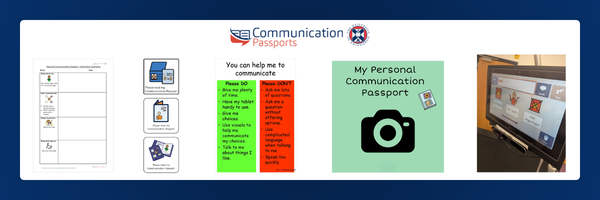
Communication Passports are a way for someone to share key information about themselves and to help people get to know them better. They can be useful for anyone who cannot easily communicate information about themselves.
A Communication Passport is not the same as information shared between professionals or for official purposes. It is a relationship-building tool that:
We presented at the Communication Matters Conference last year on the subject of Communication Passports. During the conference, we had the opportunity to ask adult AAC users what they thought of Communication Passports.
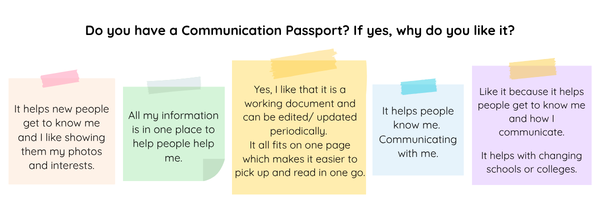
Common themes from their responses were that Communication Passports helped people get to know them and how to support them.
One person noted that it can be difficult to know what to include in a Passport and how to organise the content. On the Communication Passports website, there is guidance, templates and examples to support each stage of the creation process.
Over the last 6 months we have been refreshing the CALL Scotland Communication Passports website. The Communication Passports website has a new domain, a refreshed look and lots of new resources.
From permission forms to create a Passport, through best practices in collecting information, to creating Passports, you will find detailed ideas and guidance on the website.
Communication Passports Website.
As Communication Passports are personalised, the content will vary from person to person. In the ‘Gathering Information’ section of the website, you will find a list of ideas for topics that you might want to include.
To help gather information from different people who know the individual best, there are example forms on the website that can be used as they are or adapted if preferred.
Communication Passports should be created collaboratively and involve the individual, as much as possible, as well as the people who know them best. We may need additional tools or resources to support someone to make choices or share their opinion. If an individual can’t easily share how they feel or what is important to them, it is important to have conversations with people who know them well to reflect on their needs and preferences.
We have added a selection of simple rating scales which are free to download.
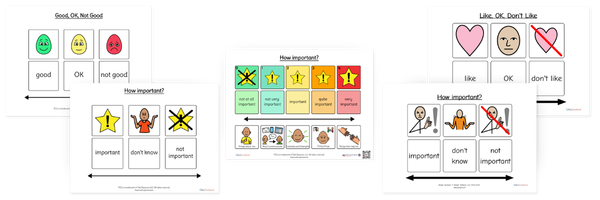
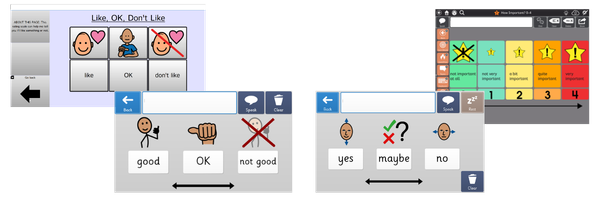
The rating scales can be used alongside other tools and resources to guide discussions and support someone to share their opinion. These conversations help focus on involving the individual, to create ownership and to really hear their voice in matters concerning them.
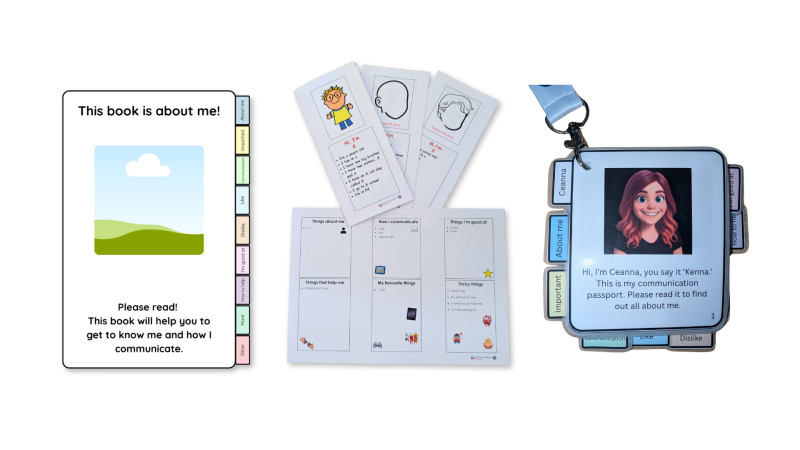
Ideally, everyone should have a customised Passport. However, this can be quite time-consuming, particularly when getting started or if you are new to creating Passports.
A template can be a useful starting point, and to get ideas on what to include or how to present the information. That said, it is important that we do not adopt a ‘one size fits all’ attitude and personalise as much as possible.
We have a variety of templates available to download on the website.
Explore information and resources to help when creating Communication Passports.
Communication Passports: Creating Passports.
Some sections of the website are still under construction as we continue to develop the website and resources.
What else would you like to see included on the Communication Passports website?
Please get in touch with any questions or suggestions which will be considered in our next phase of development.
Contact: ceanna.macgregor@ed.ac.uk
8-week short study online course
Newsletter: join thousands of other peopleOnce a month we'll send you an email with news, research and thoughts, as well as training courses and free webinars you may wish to attend.
Our social media sites - YouTube, Twitter and Facebook